Google’s announcement last month that it would introduce generative AI into search result pages (SERPs) has been met with much handwringing from pretty much anyone who relies on web traffic for all or some of their income.
After all, Google is the most visited site on the web.

It’s hard to imagine any other site that could drive traffic at the scale that Google does. Not only that, but optimizing your content strategy for Google is one of the most effective ways to drive passive, evergreen traffic.
So it makes sense that when Google unveiled the first images of SGE, Google’s AI-powered SERPs that answer user queries directly at the top of the page, people were nervous.

But after having several weeks to digest information and look at the evidence, I’m feeling optimistic.
The bigger trend
This is far from the only move that Google has made that increasingly keeps users in the Google environment. By and large, these moves have actually not had a negative impact on referral traffic.

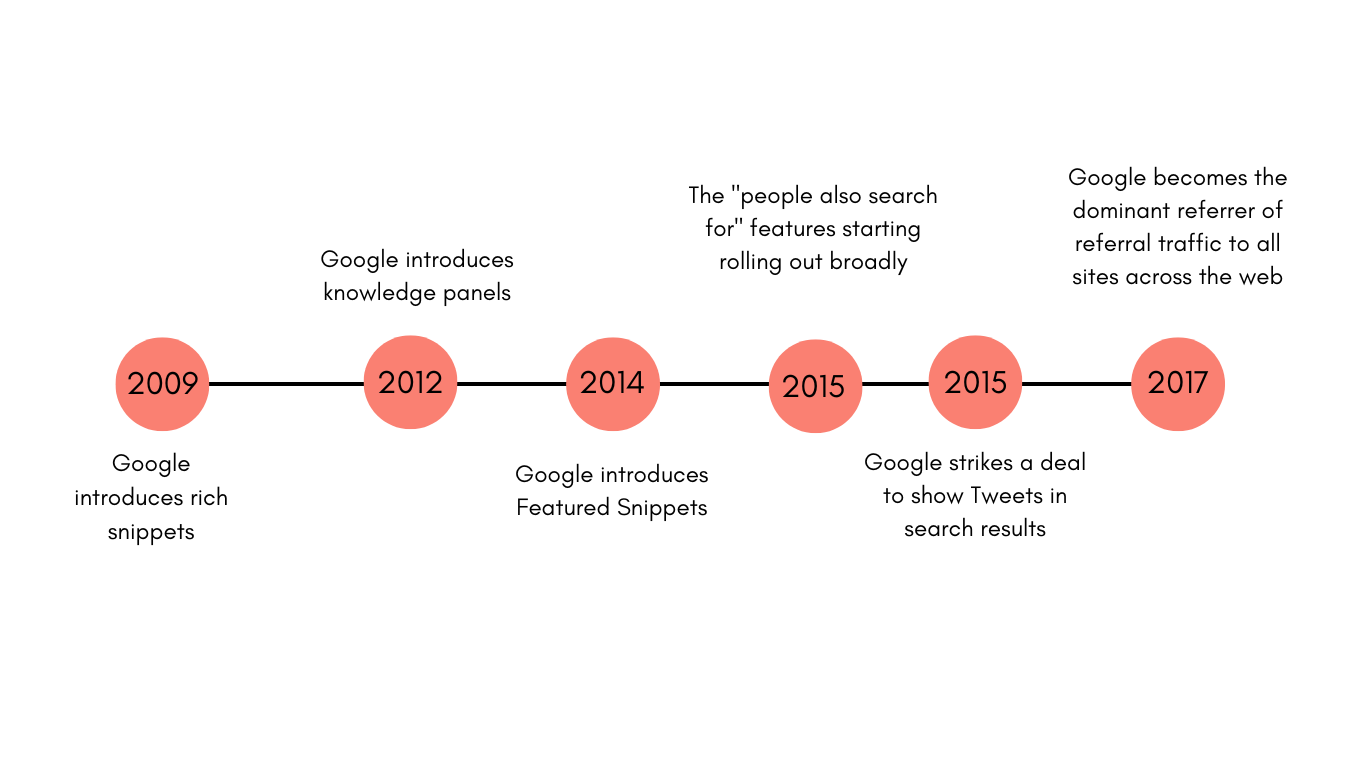
- 2009 Google introduces rich snippets, the original search result preview.
- 2012: Google introduces knowledge panels, the information boxes on the righthand side of the page that display key information about people, places and things.
- 2014: Google introduces Featured Snippets, the real estate at the top of the page that highlights a portion of text Google thinks the user will find relevant.
- 2015: The “people also search for” features starting rolling out broadly.
- 2015: Google strikes a deal to show Tweets in search results.
- 2017: Google becomes the dominant source of referral traffic to all sites across the web.

Google relies on the health of the open web
Google VP Cathy Edwards recently keynoted SMX Advanced, one of the biggest SEO and SEM conferences of the year. Moderator and host Barry Schwartz asked her to explain how SGE works. Here’s what she said.
“When the user issues a search query we go out and we find all of the best content for that query like we normally would using our same ranking principals,” and AI goes on to organize and contextualize it.
This means Google is reliant on robust open web. That gives them a reason to incentivize publishers and creators to keep making quality content. The best way to do that is to send them traffic.
She spoke a lot more about how crucial the health of the open web is, and how important it is to users to get more context directly from the source. To that end, you can watch the whole keynote here.
AI is actually making SEO easier
The changes AI are bringing today are scary. But as of today, AI is also making SEO easier, like with this cool tool I wrote about last week, that are actually making it easier to scale up your traffic generating strategy.

Leave a Reply